Ludwig Anschau
Also known as Louis, Lewis or Joseph, Ludwig Anschau arrived in Australia from Germany in 1849, aged 5, with his family on the ship Beulah. Along with other German families, they came to work as ‘vinedressers’. Ludwig’s father, Franz Joseph, and the elder boys first worked on the Mulgoa estates of Edward Cox until they all purchased portions of the estate when it was subdivided in 1859, to establish their own vineyards. As Ludwig grew older, he also worked on his father’s property, and as a blacksmith in the Luddenham village.
On 14 July 1867, Ludwig married Bridget Dorahy at the Roman Catholic Chapel at Greendale. During the 1870’s, Ludwig purchased a total of 180 acres of the Luddenham estate for farming, including, in 1883, one of the smaller portions of the estate which was to become the basis of his ‘Ferndale’ property (now in the orbit of the new Western Sydney International Airport)
Ludwig and Bridget had 14 children (one of whom died in infancy) and all were born at Luddenham, including Montague Austin who is also buried in St Patrick’s Cemetery.
Family anecdote: ‘To entertain the children, Bridget would take them to play in the creek at the bottom of the property where they would pick reeds and make plaited hats, which the children would wear to school. The children attended the little bush school, and although leaving school at about 13, they could read and speak well.’
As well as farming on the property, Ludwig started experimenting in tanning, when in 1888 with the help of his four sons, he “launched out as a full-blown tanner” under the business L.J Anschau and Sons. Substantial dams were built, pits laid, and buildings erected to store hides and leather. “A first-class article was produced commanding good prices in the Metropolitan markets.” Ludwig then realised that the bark he had been purchasing from the city was inferior to the Mimosa he could source locally, and he purchased machinery to process this wattle bark himself.
The next advancement was manufacturing leather “Blücher” style boots and shoes. Buildings and machinery increased and again the standard was high, with additional employees (14 in total) recruited, producing up to 250 pairs per week. One of the largest purchasers of the footwear was Anthony Hordern & Sons.
By 1902 increasing trade called for more extensive premises and they were able to purchase the Colonial Tannery at St Marys/South Creek, formerly known as Page’s Tannery. The Granville firm of Marsh Brothers intended to take over the old Page Tannery, but when this did not eventuate, the tannery’s 66-year history came to end
(1843 – 1935)
Arrived Free from Germany
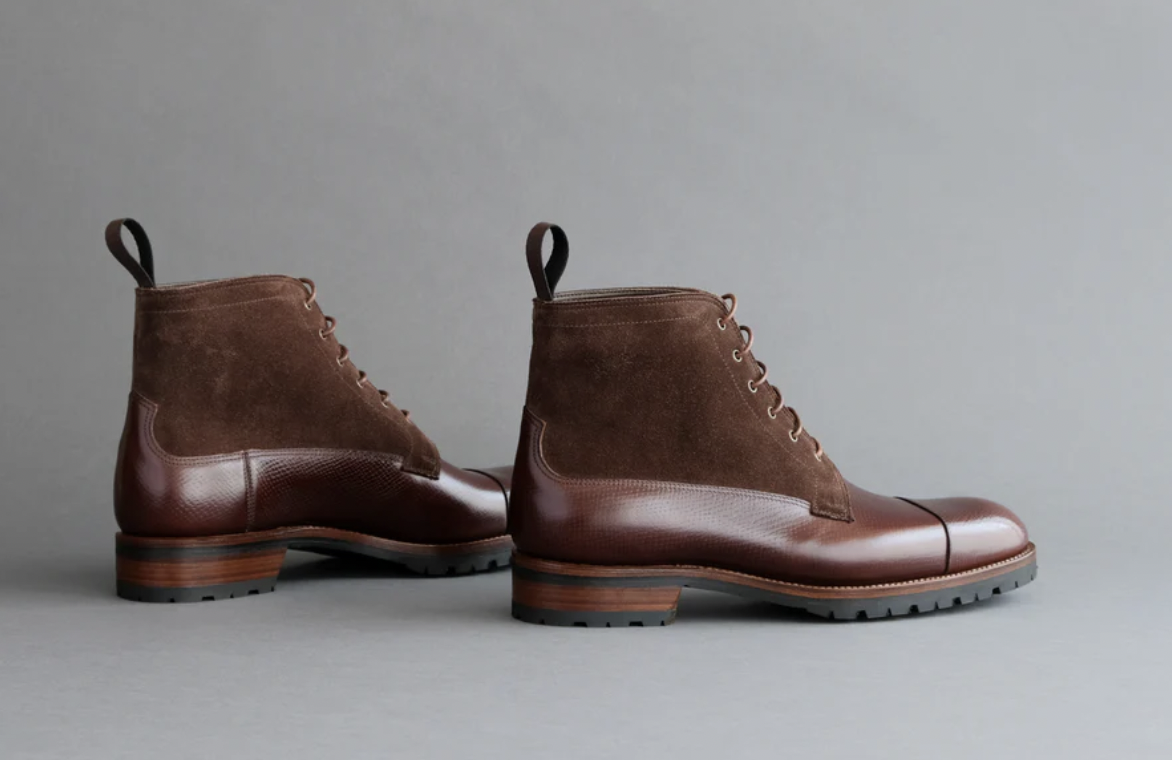
A modern take on the Blücher boot
Following this closure, the family moved to 36 George Street, Parramatta and the couple continued to run various businesses including boot making. Their home - a block extending through to Phillip Street and previously owned by the Pringle family since 1870 - adjoined the first cinema (originally open-air) in Parramatta, built by the Bennington brothers, and known as the Parramatta Picture Palace. It was later replaced by the Art Deco style Civic Theatre which later became the Civic Arcade -still standing!
Family anecdote: The house shared a common wall with the picture theatre. Apparently, the family cut a window into the tin construction to give the family a chance to view the silent movies. ‘The grandchildren really enjoyed this, and it worked well until the young fellows and their girlfriends sitting in the back stalls started throwing peanuts at them’.
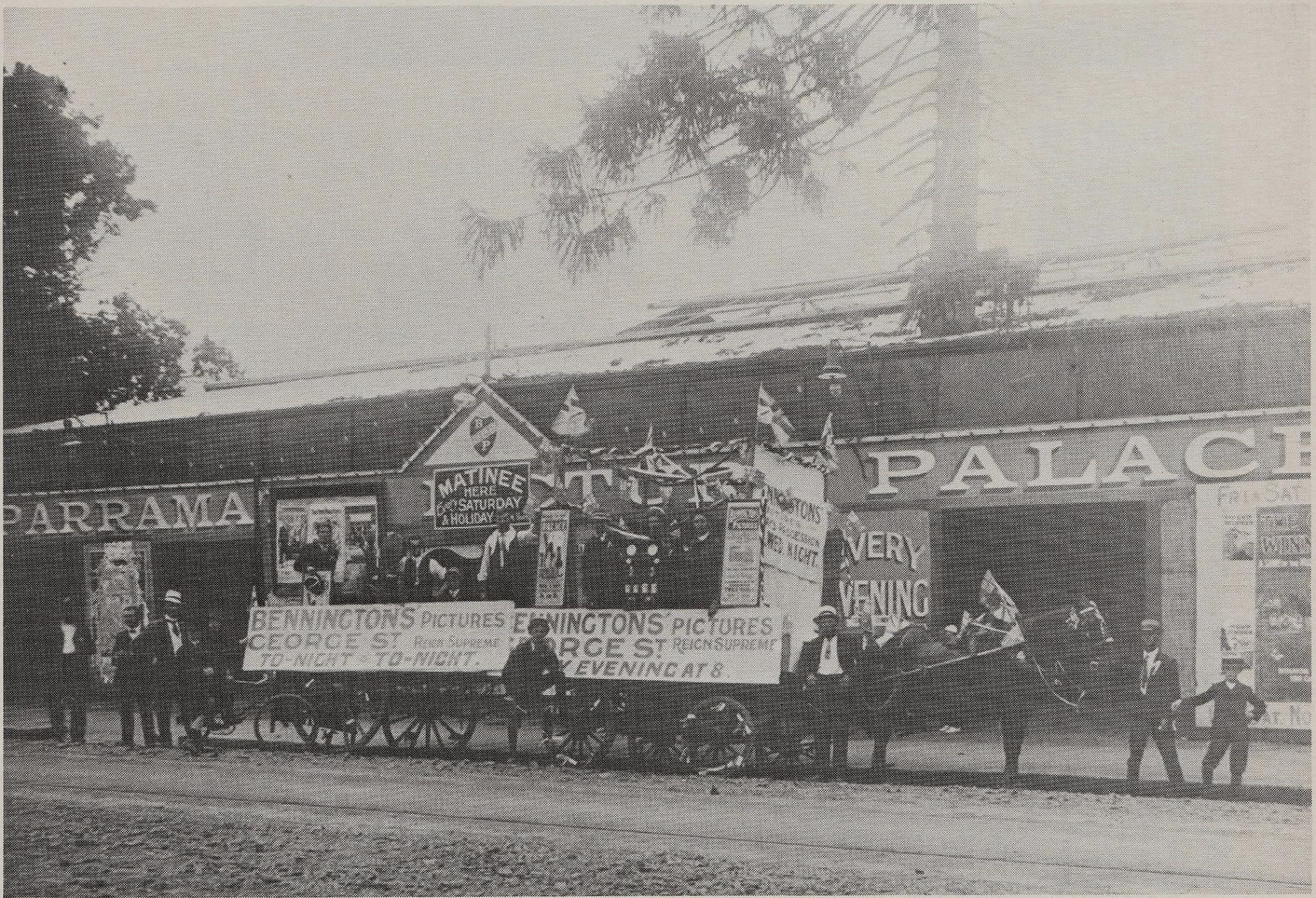
Parramatta Picture Palace - note the Norfolk Island Pine coming through the roof!
Around this time, Bridget asked her husband to use the name ‘Louis’ or ‘Lewis’ instead of ‘Ludwig’ when anti-German feelings became apparent. And in fact, both Ludwig and his wife Bridget, in their ‘70s by this time, had to register as ‘aliens’ under the War Precautions (Aliens Registration) Regulations of 1916. Ludwig’s father Franz Anschau was naturalised in 1859 and at the time this covered his children, but after Federation the law was amended, and Ludwig was deemed to be a non-British subject. As Bridget was married to a ‘subject of the German Empire’ she had to register as an alien along with her husband.
After Ludwig went deaf and later blind, Bridget managed the businesses with a firm hand until their retirement. Bridget and Louis continued to live in Parramatta with their children Florence, Catherine, Daniel, Montague and Rupert. (and (1925 Electoral Roll).
When Bridget died aged 83, it is understood that her funeral Mass was concelebrated by the Bishop and six priests. The marble headstone acknowledges her Irish background with a decoration of shamrocks. Ludwig was 92 when he died at the home of his daughter Florence at 82 The Boulevarde, Strathfield.
Author: Inara Molinari, 2026
References: thanks and acknowledgement to descendants of the Dorahy/Anschau family (shanecollinge) who shared information and anecdotes via ancestry.com; Trove, and in particular, “A Luddenham Industry”, Nepean Times, 10 April , 1897, p.4.