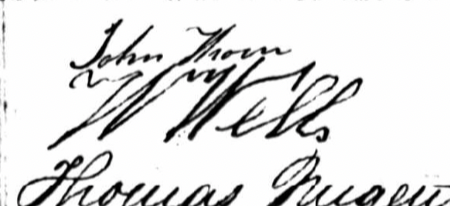
Maria Wells
Maria Wells’ headstone is the oldest extant memorial of a woman in St Patrick’s Cemetery.
Embarking on research, the first hint for a Maria Wells came from a very brief notice in The Australian, Wednesday 19 July 1826, which matched our headstone’s details:
DIED - “On Monday, the 17th instant, at Parramatta, Mrs Maria Wells, wife of the deputy chief constable of that place.”
Confirming that the deputy chief constable of Parramatta at the time was William Wells, helps us learn more about Maria’s journey, namely, that one Maria McIntire married William Wells in St John’s Church, Parramatta on 15th January 1816.
There are many William Wells living at this time (10 in one Census), but only one William Wells in the Census records for Parramatta. In addition, whilst there are three Mary McIntires who arrived within a few years of each other around this time, based on birth/age records, this author believes that our Maria, a servant, arrived courtesy of the convict ship Northhampton in June 1815, having been tried in Maidstone (Kent Assizes) in April 1814, and sentenced to Life (crime unknown).
The Colonial Secretary’s Papers, letter dated 23 June 1815, states:
“Herewith a list of 56 women convicts arrived by the Northhampton who are now sent to Parramatta to be employed in the usual way at the factory or distributed among married settlers on their writing with the required securities for the treating them properly …”
Maria McIntyre was one of those listed, and “disposed of” to the Parramatta Female Factory on arrival. At that time, the Factory was located in two rooms above the original Parramatta Gaol near/on Prince Alfred Park. Reverend Samuel Marsden, who would the following year officiate at Maria and William’s betrothal, described the following:
“There are forty-six women daily employed: twenty spinning wool upon the common wheel and twenty-six carding. These rooms are crowded all the day, and at night such women sleep in them as are confined for recent offences, among the wheels, wool, and cards, and a few others who have no means whatever of procuring a better abode… Were the magistrate to compel even half the number of women with their children to sleep in the factory which belong to it, they could not exist. Not less than one hundred and twenty women are at large in the night to sleep where they can. Many of them pay four shillings per week for their lodgings and fire; they have no means but theft and prostitution to obtain this sum, and these vices are become so common and habitual, that the women will tell the magistrate that they have no other means to supply their necessities.” [2]
As the wife of the Deputy Chief/District Constable, life would have been eventful and certainly dangerous at times for her husband.
Maria’s husband William was born around 1784 in Derbyshire England. He was convicted at Nottingham Assizes for Highway robbery and was transported for Life on the ship Fortune which departed on 31 October 1812 and arrived on 11 June 1813. Early records show that in 1814 he was employed as a servant to Richard Haviland (also a Convict) who vouched for his character when Wells applied for his Ticket of Leave in 1819.
Later that year, Wells was appointed as a Constable in Parramatta. He was certainly active, although one newspaper article suggests a little too zealous in carrying out his duties! [3]
Some notable examples:
1 August 1822: William is granted a Conditional Pardon for “meritorious service ion the apprehension of bushrangers…”, viz. “apprehending George Bark”, who was then convicted and executed for burglary. At this stage , Wells is called a District Constable and by April 1823, earning 30 pounds per year, plus bonuses!
1 November 1824: “[Wells] has served with fidelity for four years…two months ago apprehended a prisoner by the name of Job Jones..a runaway and at large for the terms of seven years.”
23 December 1824: William is rewarded with 75 pounds sterling for having assisted with the apprehension and prosecuting to conviction three prisoners for burglary.”
23 September 1826: Parramatta Police received information to the effect that a party of bushrangers were in the area of the Western Tollgate near Parramatta. Chief Constable John Thorn, Constables Ratty and Wells, and a Mr John Piesley immediately proceeded to the area as part of a “sting” operation during which Thorn sustained a slight head wound, one of the bushrangers was killed, and Constable Ratty was shot in the back, from which he died two weeks later. You can read more about this incident HERE
c. 1787 - 1826
English Convict
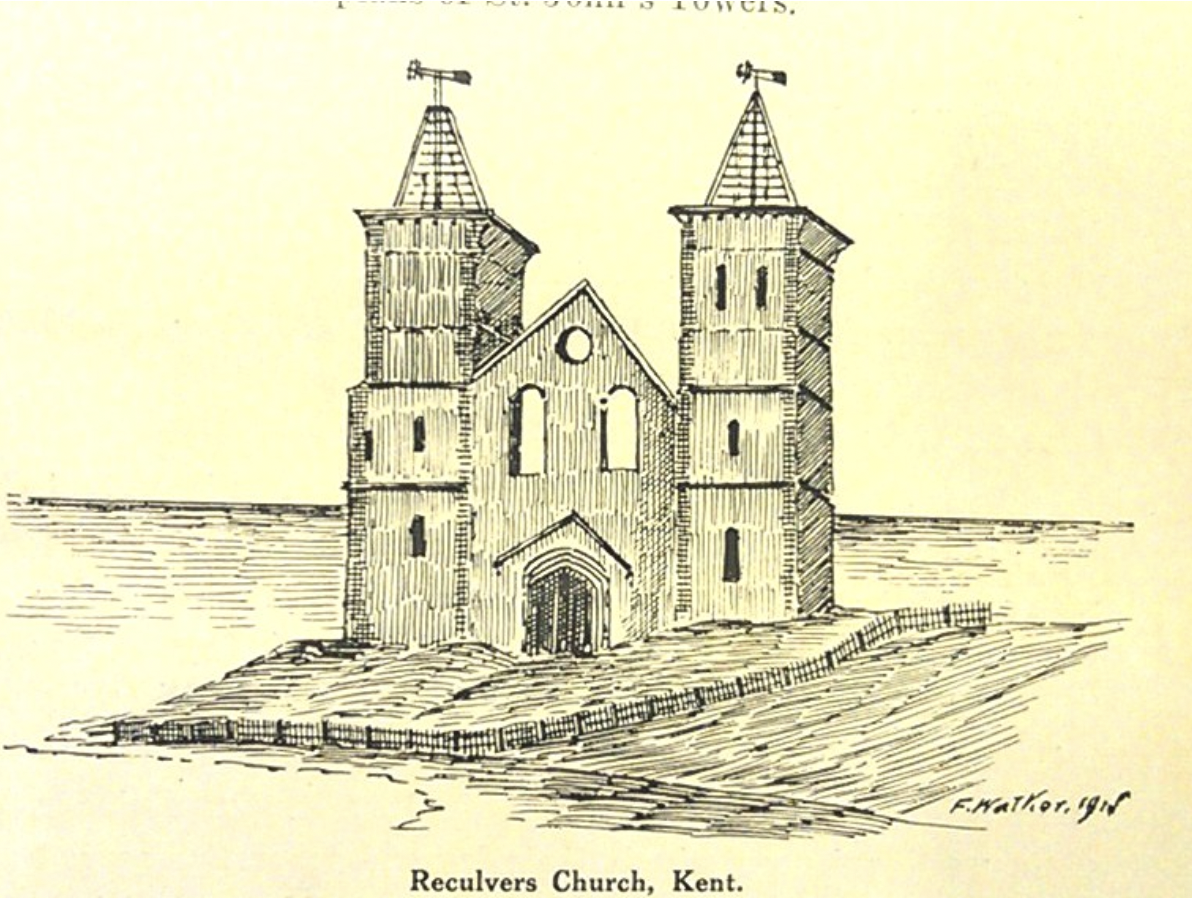
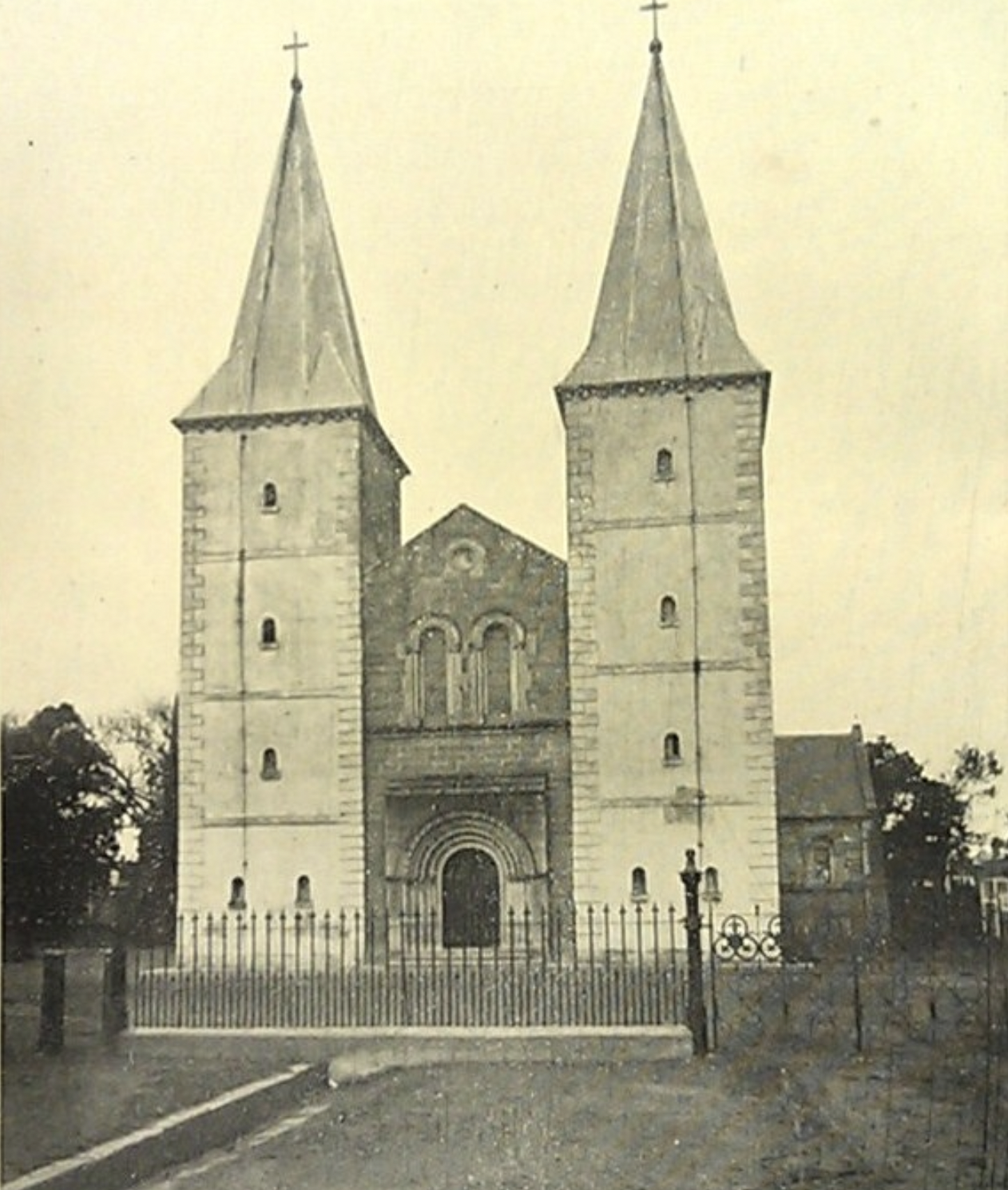
Made out of brick the predominant feature of the ‘Old’ St John’s Church was the two towers inspired by a similar set on Reculver’s Church in Kent (above). The story behind these somewhat unusual features states that they were made at the request of Mrs Macquarie as Reculver’s was the last church she saw as she left England.
In relation to the couple accumulating property and freedom, we find the following:
12 June 1824: Memorial to the Governor, in which it is stated:
“that the Memorialist [William Wells] received his Free pardon from Your Excellency for his good conduct in assisting the apprehension of the runaway Baxter that Memorialist is now Deputy Chief Constable at Parramatta supporting an honest upright character and giving general satisfaction in his office. That Memorialist having accumulated some property feels desirous of improving a farm, and respectfully solicits your Excellency to take the above into consideration and grant him a farm.”
Thirteen days later, this request was approved, with 50 acres of land to be granted.
October 1825: William writes to Governor Brisbane and based on his service record requests he be allowed a passage to England. That request was promptly granted, but we do not know if he did end up travelling.
28 November 1825: “Maria Wells, ex Northhampton, is granted a Conditional Pardon.” [Sydney Gazette Notices]. This means that a convict could enjoy freedom as long as they remained in the colony. This was not an issue for Maria as she died on a mere eight months later aged 40.
December 1825 Pay Records: On the same pay remuneration document as Thomas Nugent, our oldest extant headstone in St Patrick’s Cemetery and also on the QR tour.
1826 – Wells, listed as a “District Constable Parramatta Police” earning 52 pounds per year.
No records could be found by this author confirming whether the couple had any children, whether William remarried, how long he remained a Constable, nor when he died.
Copyright: Inara Molinari, 2026.
[1] Marriage Records , St John’s Church Register
[2] As referenced by Female Factory Online. Copyright. Michaela Ann Cameron. Samuel Marsden, Letter to his Excellency, 15 July 1815, ‘Minutes of Evidence taken before SELECT’; House of Commons, ‘Report from the Select Committee on the State of Gaols &c. (12 July 1819) in House of Commons, Selection of Reports and Papers of the House of Commons 51: Prisons (House of Commons, 1836), p.82.
[3] Article: “To the Editor of the Monitor”, Friday 7 July 1826, p.5. Author: James Kerten.