Morgan Power I
Convicted and sentenced to death for stealing 26 sheep, the charge against Morgan Power I was commuted to life with seven years hard labour. There are accounts that Morgan had purchased the sheep in good faith from a reputable dealer, but he was thought to be an Irish rebel, so perhaps this was a convenient way to dispense of him!
Morgan left Cork on the convict ship Brittania II on the 10 December 1796, arriving in Sydney on 27 May 1797. The voyage lasted 5 months under Captain Thomas Dennott who was considered to be a sadist, locking convicts in irons and subjecting them to regular floggings. Most survivors from this ship arrived in the colony emaciated.
Morgan I was immediately despatched to the Government Farm at Toongabbie. By this stage the farmlands, which had been cleared by convict labour under very harsh conditions to grow maize, wheat and barley for the colony, were expanding to include horses and cattle.
After three years therefore, in 1800, Morgan I was made Overseer of the Government Cattle Farm, a very responsible and critical position for the early colony.
In 1803, the Sydney Gazette mentions that Morgan Power was found guilty of
“…purchasing slops (food and clothing) from prisoners at public labour in Toongabbie, where he also served his sentence.”
It’s rumoured that this may have been where he met his future wife, Irishwoman Bridget Byrne (1773-1820), former dressmaker but more recently, transported on the convict ship Rolla for the murder of a policeman. She reportedly put a rock in a sock and whacked him for having killed her brother. Bridget is buried in historic St. John’s Cemetery, Parramatta.
Bridget and Morgan married in 1804 and had two sons, Timothy and Morgan II.
Morgan I was finally granted an absolute pardon at the ripe age of 52
By the time of Morgan I’s death, at age 65, he was a significant landowner and farmer of “horned cattle” in the Seven Hills district (today’s suburb of King’s Langely). Described on his son Morgan II’s death certificate as a “cattle doctor”, Morgan I divided his 1,179 acres, purchased privately in the main from landholders such as Vardy, John McArthur and Kelly, between his sons, down to specifics about his cattle and even the mare called Poppet !
His young sons became instantly wealthy. Timothy did not fare so well during the 1830’s Depression that followed, unlike Morgan II, who was quite a different, some might say notorious, character. You can read about Morgan II who is also buried in St Patrick’s Cemetery via this website.
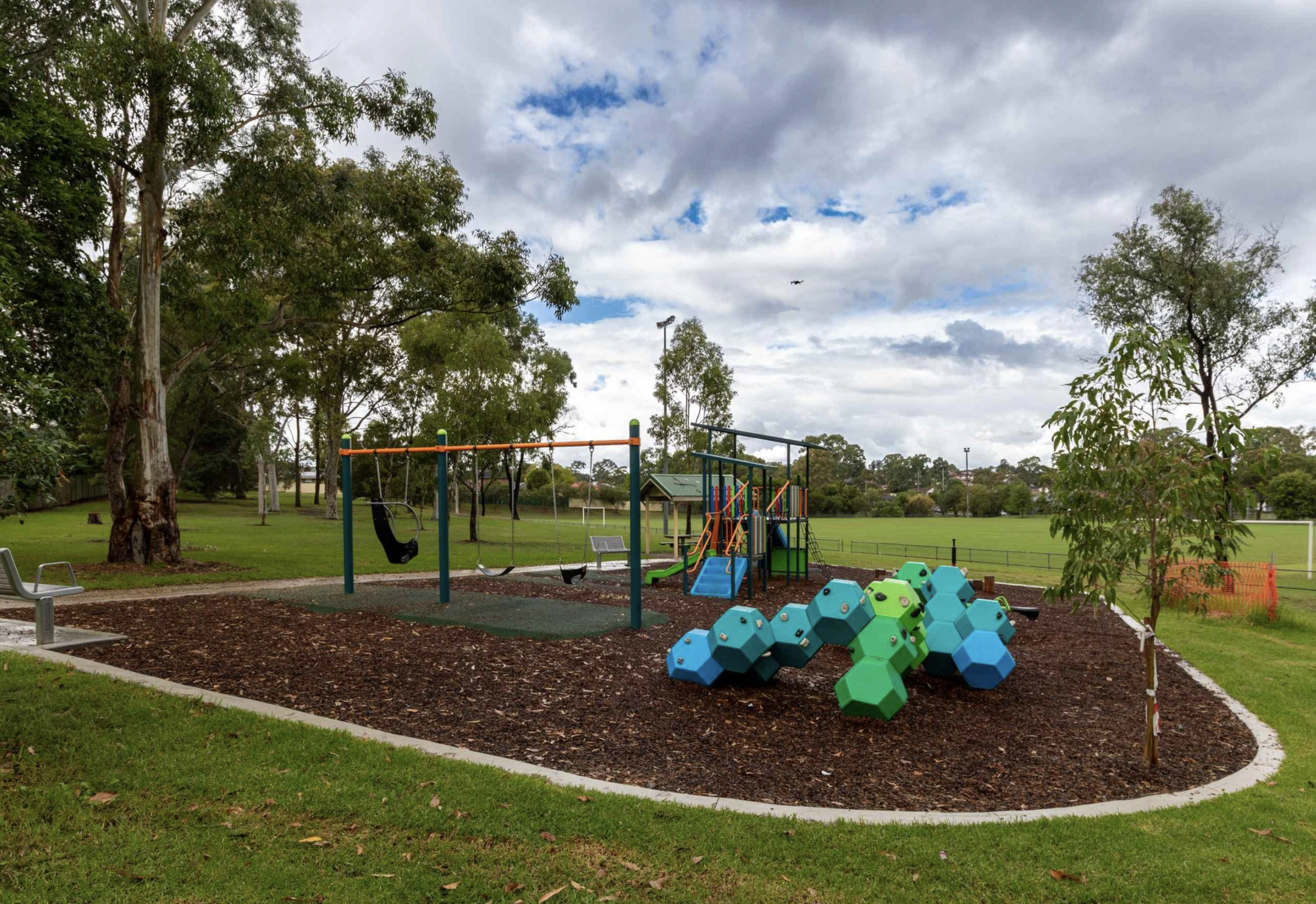
Morgan Power Reserve on Vardys Rd, Blacktown (below) is a popular sports field named after Morgan I along with a number of local roads.
Copyright Inara Molinari 2026
(1760 – 1825)
Irish convict and suspected rebel