John Hourigan
John (Bass) Hourigan was born in Church Street Parramatta in 1869 to Mary Scully and Michael Hourigan. John married Mary Rochester and they lived in various houses in North Parramatta before moving to Moxham’s Road, Northmead in the 1920s where the last of their 12 children was born.
The extended Hourigan family was already involved in sandstone quarrying when John leased the Government quarry which is situated behind the current Northmead Bowling Club. He established a very successful business as Northmead’s stone was highly prized for its beautiful colour and was much sought after for buildings and landscaping. A large block of white sandstone from the quarry was carried on a wagon in a procession through Parramatta. Rubble was used for major road construction including the Parramatta Road.
As well as members of the large Hourigan family, many locals were employed in the dangerous and backbreaking work of stone quarrying. Workers’ hands became like leather and in winter they cracked open until they bled. There was little machinery, the men abseiling down the face of the quarry to reach the area to be worked.
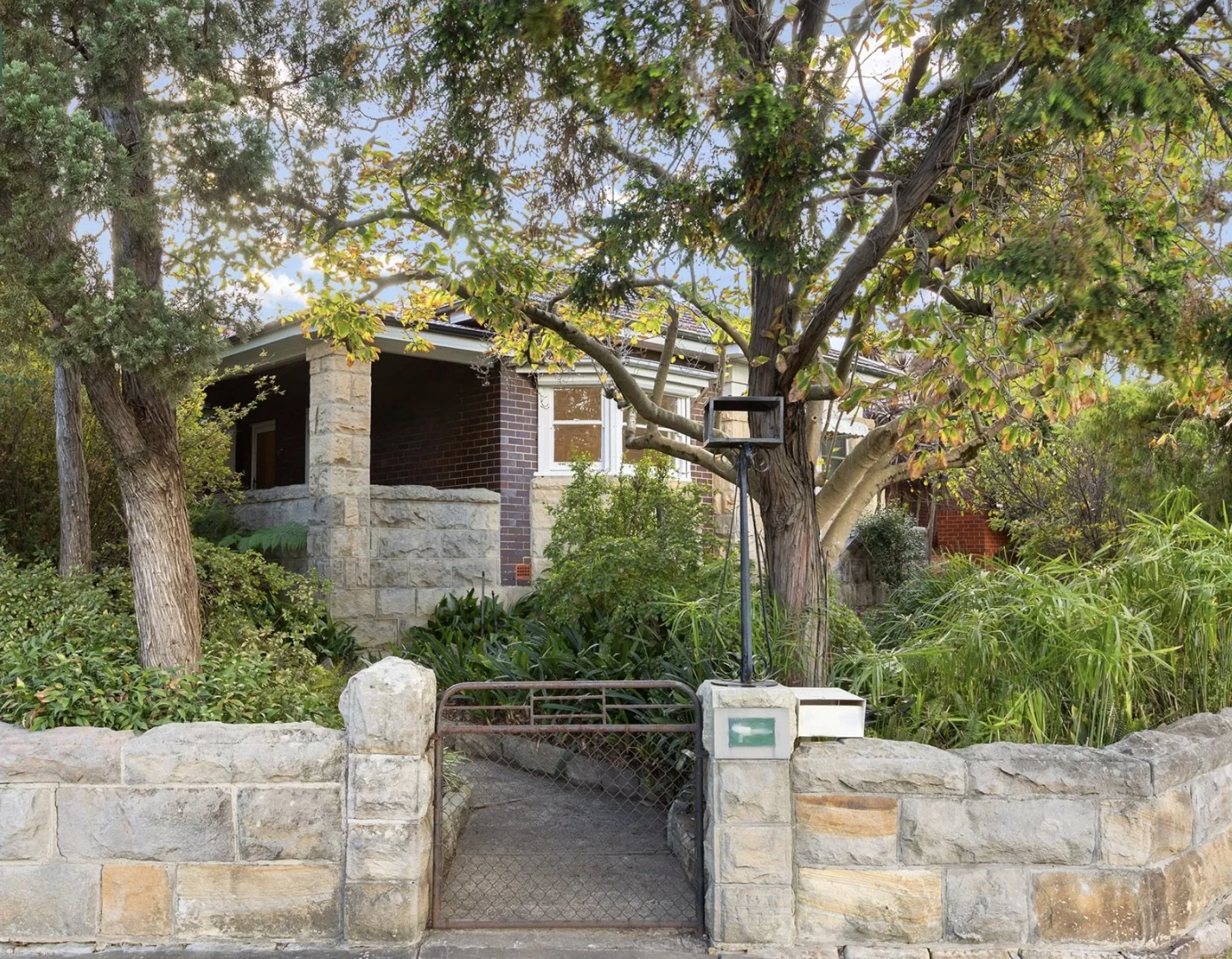
In the 1930s John built his home on the corner of Moir Avenue and Windsor Road with the sandstone used, cut by his son Thomas. This house can still be seen today [see photo]. Neil Cottage standing on the corner of Churchill Avenue and Windsor Road, built of the same stone, belonged to Hourigan’s cousins. After heavy rain and hitting an aquifer, the quarry filled with water and was not mined again. Fortunately, John and Mary had bought land in what is now Madeline Avenue (Madeline was an aunt) and opened a further quarry there. He also opened a new quarry at the Hammers Road end of what was known as Quarry Range along Quarry Creek and Quarry Arm Creek.
This new quarry produced stone for buildings and roads, but it was also sent by rail to BHP Newcastle for high temperature furnaces. When Robert Hourigan died in 1924, the sale of his working plant shows equipment required to quarry at that time. Horses, drays, harness, lorries, sulky, pony, winch and crane, the latter two could be viewed at the quarry off Windsor Road, Northmead.
Quarrying by the Sonter, Moxham, Scully, McMahon and Hourigan families as well as other government quarries continued until the 1950s when proximity to new housing made blasting problematic.
The disaster for the family of the Northmead quarry filling with water, conversely brought joy to much of the surrounding population as it became the Northmead swimming pool. On weekends people brought picnics and spent their days swimming in the clear water which was in places up to 15 feet deep.
Known as both Moxham’s Quarry and Hourigan’s Pit, many newspaper reports tell of accidents and incidents both when in operation and when it became the swimming hole. Picnics were the best reports but also stories of a 12-year-old boy falling 50 feet into the quarry and being rescued by police in a canvas canoe, a car being driven over the edge into the water and the subsequent retrieval of a woman’s body. There was a theft of stone, iron from work buildings, detonators and fuse wire by a gang of safe blowers. Many are the reports of serious crush injuries and fractures from falling rocks hitting workmen when blasting. Quarrymen also died young due to inhaling silica dust into the lungs when cutting stone. Thirteen Hourigans are buried within a large sandstone memorial in St Patrick’s Cemetery.
One curious newspaper report is of Frank Murphy of Northmead winning the Australian high diving championship at Morningside Quarry in 1949. One wonders if he practised at Northmead quarry. There are many stories that could only do justice to the quarry industry by a more extensive article.
Copyright Judith Dunn OAM
Sources: J Aubrey, B. Prudames, Daily Telegraph, CAFA, TROVE
c. 1869 - 1955
Born in Parramatta